Archives

  • The Centaurs

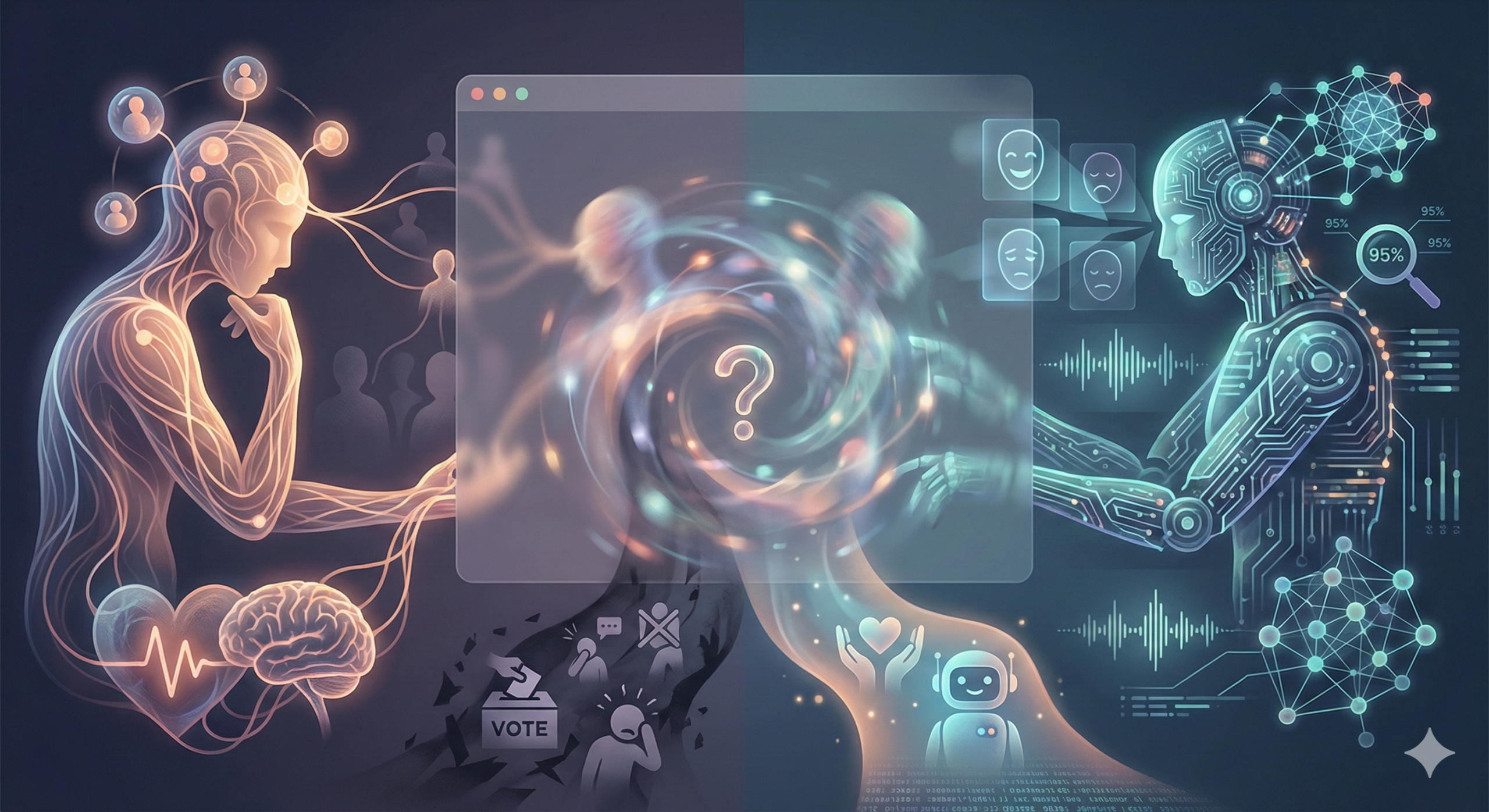
    We’ve talked about the nine Gardnerian intelligences and how AI as a technology appears to have developed competence across many of them, including making it close to emotional intelligence (EQ). But “appears” is the pivot here because what large language models and affective computing systems actually do is produce an expected and predicted output without possessing…


  • The Noise in the Machine

    In the world of machine learning, we often start with clean, well-lit and known data like the IMDB reviews dataset. But when you move that logic into global e-commerce and specifically into customer feedback analysis, the temperature rises. You aren’t just dealing with well written and structured movie reviews anymore, you’re entering a chaos of linguistic…

  • Generative AI in European Policing

    The landscape of law enforcement is undergoing a major shift. While still slow and in its beginnings, Generative Artificial Intelligence (GenAi) is no longer a buzzword and is rapidly qualifying as a new General-Purpose Technology (OECD, 2025). Its current trajectory, marked massive performance gains, industry-wide adoption and a developing high-performance computing ecosystem, suggests it will soon…

  • Bias – The Ghost in the Machine

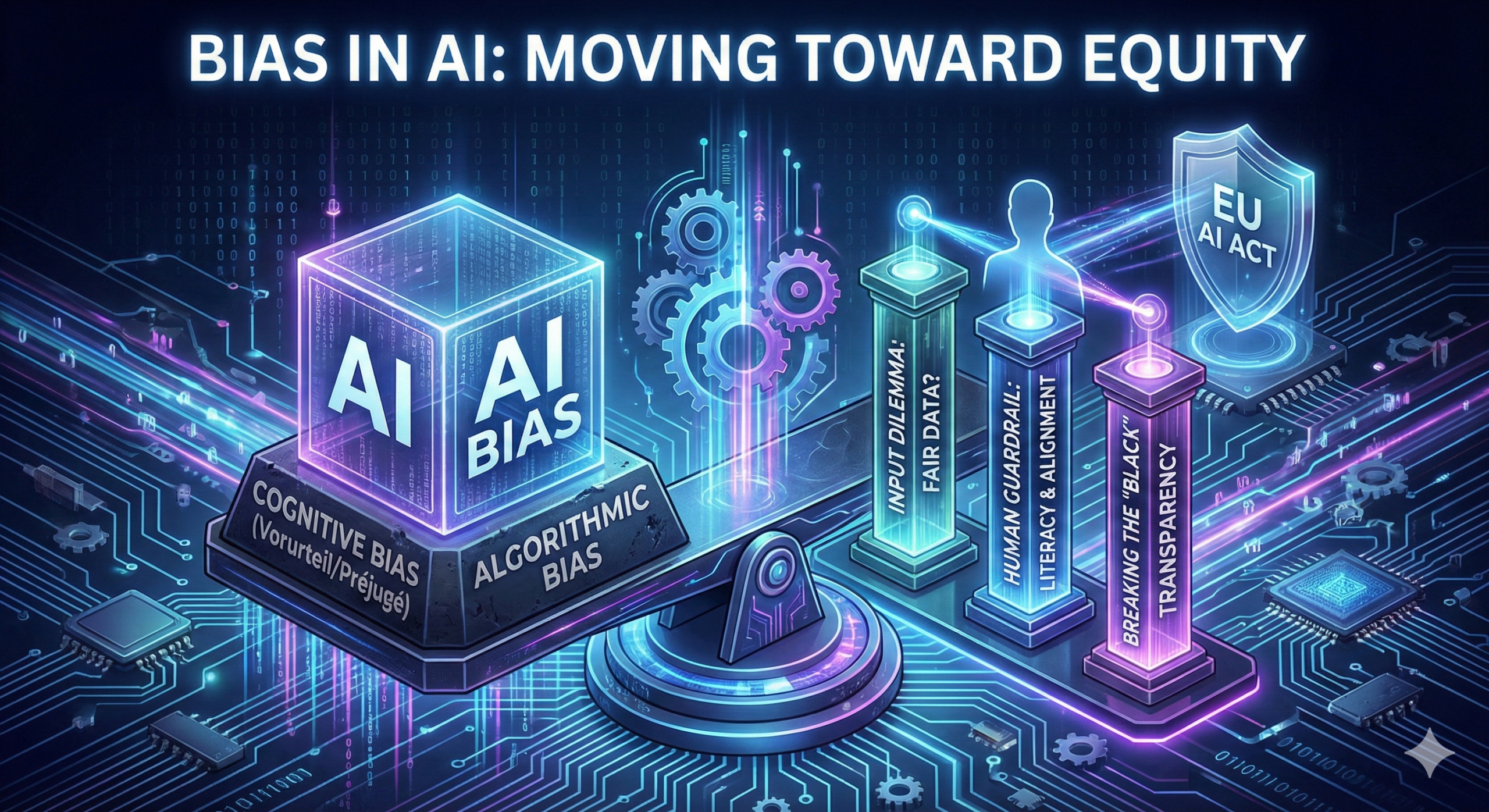
    Bias (German: Vorurteil | French: Biais), is a disproportionate weight in favour of or against one thing, person, or group compared with another, usually in a way considered to be unfair (Oxford University Press, 2026). In the world of AI, we need to consider specifically Cognitive Bias (The inherent human prejudices) and Algorithmic Bias, where AI…

  • Industry 4.0 and AI

    Historically, the development of a General Purpose Technology does not follow a straight line. Instead, societies usually move through cycles of high excitement followed by periods of losing interest. Even though we are currently in the middle of the Fourth Industrial Revolution, we can still use old frameworks to understand what is happening. One important concept…

  • The uncomfortable middle

    or the erosion of human agency Frontier AI models behave intelligently. Several dimensions of human intelligence are increasingly replicated by multimodal AI architectures, including interpersonal and intrapersonal capabilities, the classic human realms of emotional intelligence where we understand others and ourselves. While AI machines still fail strict empathy tests, the social reality is that they don’t…

  • Is the Turing Test Contentious?

    In 1950, Alan Turing proposed a simple solution to the complex question, “Can machines think?” He suggested that if a human interrogator could not distinguish between a computer and a human through text-based conversation, the machine should be considered “intelligent.” While this “Imitation Game” became the foundational benchmark for the field, it has since become one…

  • Finding a definition of artificial intelligence

    The four approaches to defining AI according to Russell and Norvig (2020): Acting humanly ( The Turing Test approach) The output counts. It doesn’t matter how the machine “thinks,” as long as its behavior is indistinguishable from that of a human. Thinking humanly (The cognitive modeling approach) The process counts. We must first understand how the…

  • The powerful imperfection

    Imagine packing for holidays. You have a fixed amount of space in the car and a variety of irregular shapes (suitcases, coolers, a guitar, tennis rackets, two dogs, a bag of snacks, …). Humans can easily solve this problem because we use a heuristic approach (a mental shortcut), like “put the big heavy boxes in first…

  • The History of AI

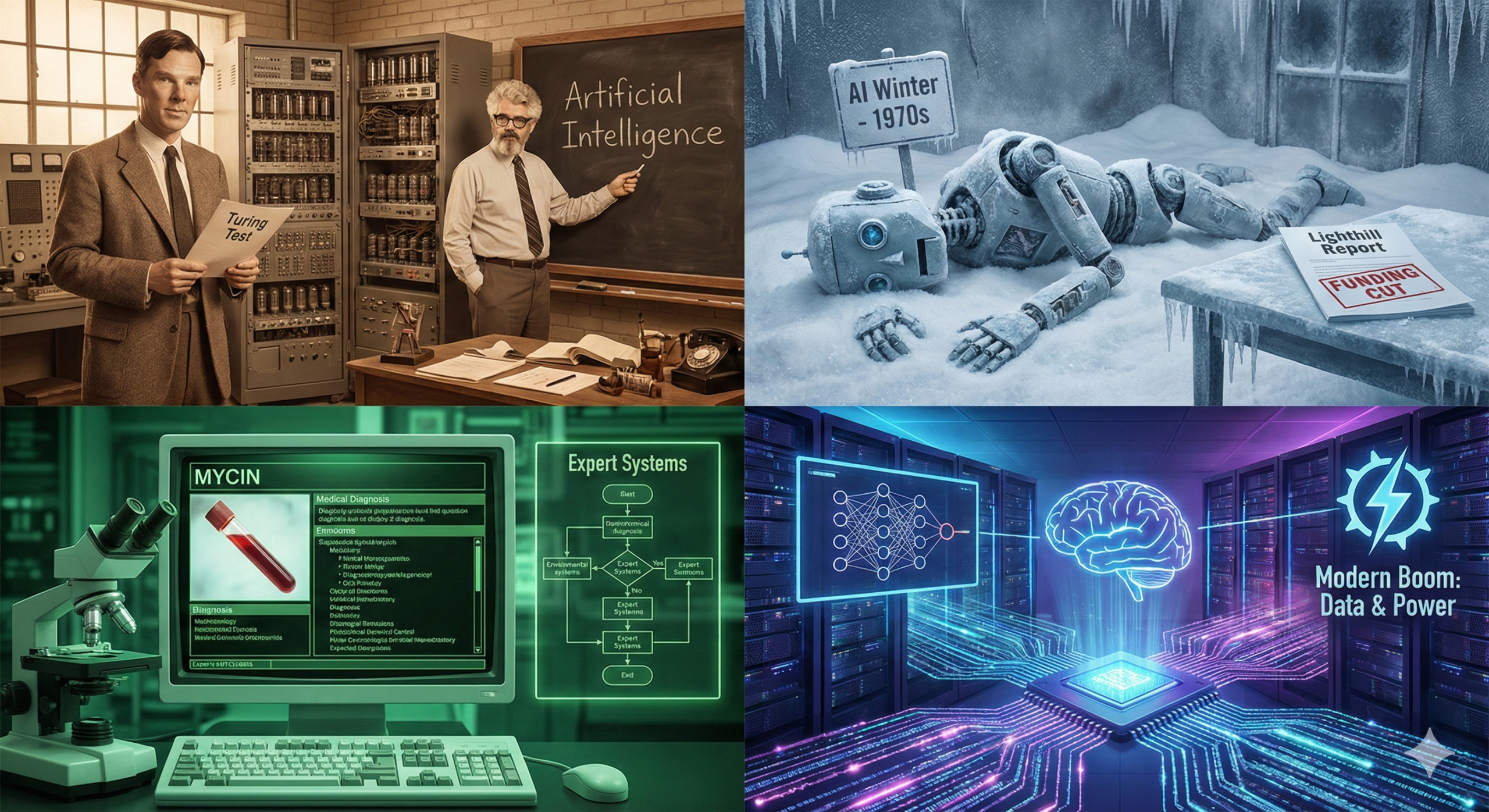
    According to Michael Wooldridge (https://www.cs.ox.ac.uk/people/michael.wooldridge/), the head of the computer science department at Oxford, modern AI is about “building machines that can do things which currently only can be done by brains“. The Birth of AI (1950s) The scientific history of AI began around 1950 with Alan Turing, a British mathematician. He essentially invented the idea…