The History of AI

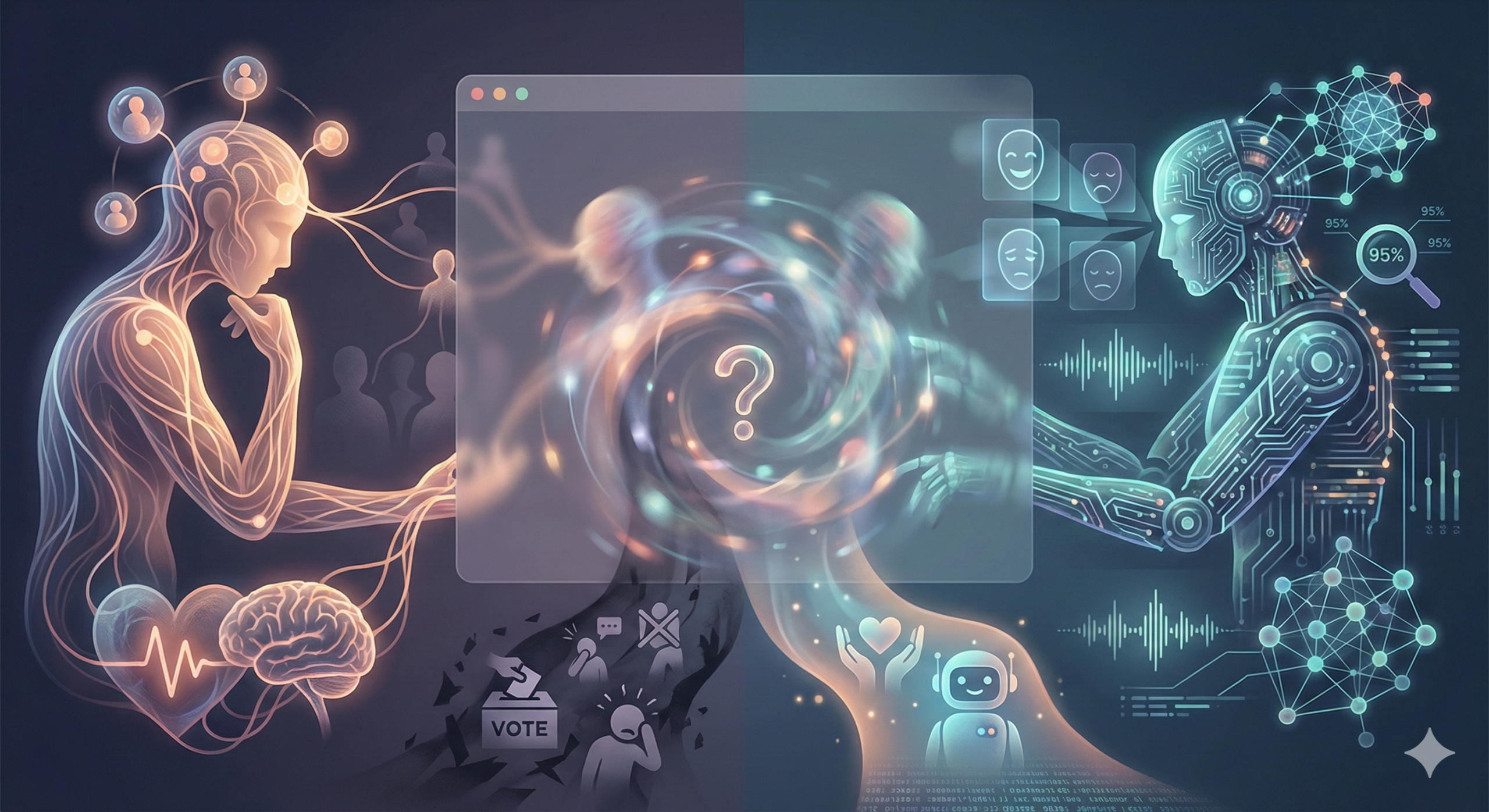
According to Michael Wooldridge (https://www.cs.ox.ac.uk/people/michael.wooldridge/), the head of the computer science department at Oxford, modern AI is about “building machines that can do things which currently only can be done by brains“.
The Birth of AI (1950s)

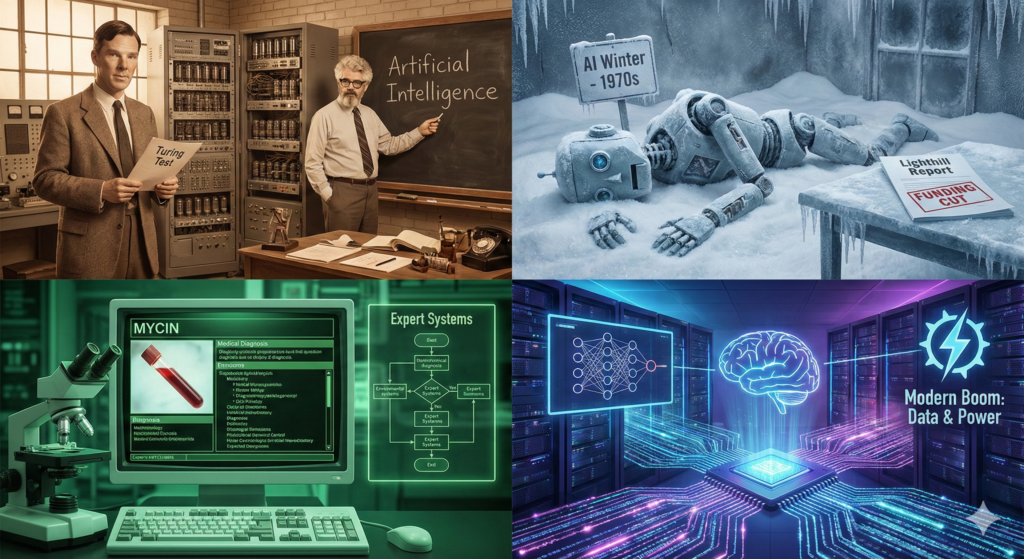
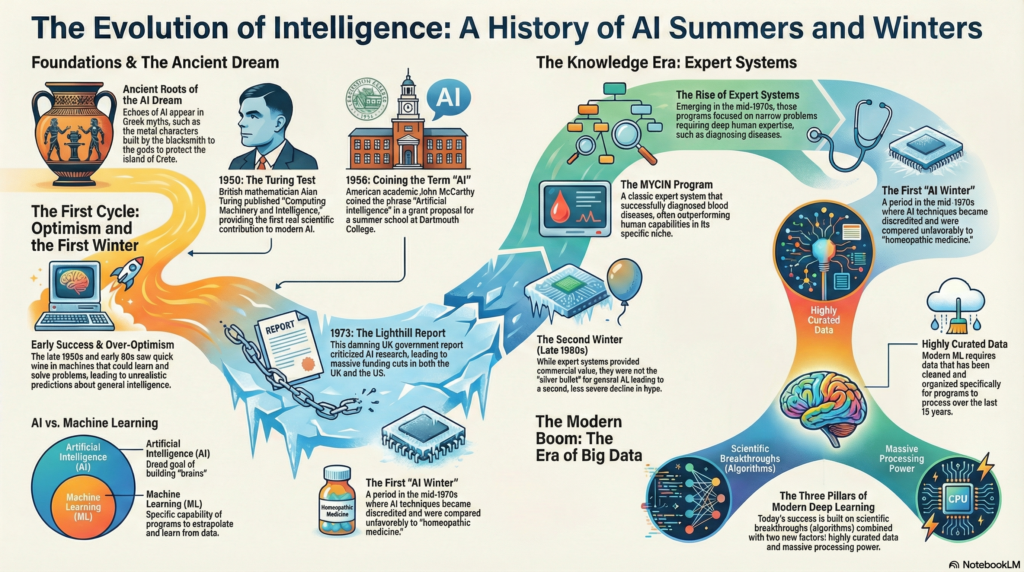
The scientific history of AI began around 1950 with Alan Turing, a British mathematician. He essentially invented the idea of the modern computer and proposed the famous Turing Test to measure if a machine is intelligent.

However, the name “Artificial Intelligence” did not exist yet. It was created in 1956 by an American academic named John McCarthy. He needed a title for a summer school he was organizing, so he coined the term “artificial intelligence,” to make it unique and the name stuck.

The “AI Winter” (1970s)

In the beginning, researchers were very optimistic. They built machines that could learn and solve simple problems, leading to bold predictions that intelligent machines would arrive very soon. When these predictions failed to come true by the early 1970s, there was a harsh backlash. A famous report in the UK called the Lighthill Report criticized AI research. As a result, funding was slashed in the UK and the US, leading to a period known as the AI Winter. During this time, AI research had a pretty bad reputation.

Expert Systems (1980s)

AI recovered in the 1980s by changing its focus. Instead of trying to create a general brain, scientists built Expert Systems. These were programs designed to solve very narrow, specific problems using expert knowledge. A famous example was MYCIN, a program that diagnosed blood diseases. While these systems were useful, they were not the “silver bullet” that solved all of AI’s problems, and excitement eventually faded again.

The Modern Boom: Data and Power

Today, we are in a new boom. This is driven by Machine Learning, which is a way for computers to learn directly from data. While the basic ideas for this existed in the 1980s, two major changes have made modern AI successful:

1. Lots and lots of curated Data: We now have massive amounts of data that is cleaned and organized for networks to ingest.

2. Processing Power: We have much more powerful computers today than we did 15 years ago.

These factors have allowed for breakthroughs in Deep Learning, making AI a central part of our lives today.
Similar Posts

  • Is the Turing Test Contentious?

    In 1950, Alan Turing proposed a simple solution to the complex question, “Can machines think?” He suggested that if a human interrogator could not distinguish between a computer and a human through text-based conversation, the machine should be considered “intelligent.” While this “Imitation Game” became the foundational benchmark for the field, it has since become one…

  • Industry 4.0 and AI

    Historically, the development of a General Purpose Technology does not follow a straight line. Instead, societies usually move through cycles of high excitement followed by periods of losing interest. Even though we are currently in the middle of the Fourth Industrial Revolution, we can still use old frameworks to understand what is happening. One important concept…

  • The Centaurs

    We’ve talked about the nine Gardnerian intelligences and how AI as a technology appears to have developed competence across many of them, including making it close to emotional intelligence (EQ). But “appears” is the pivot here because what large language models and affective computing systems actually do is produce an expected and predicted output without possessing…

  • Bias – The Ghost in the Machine

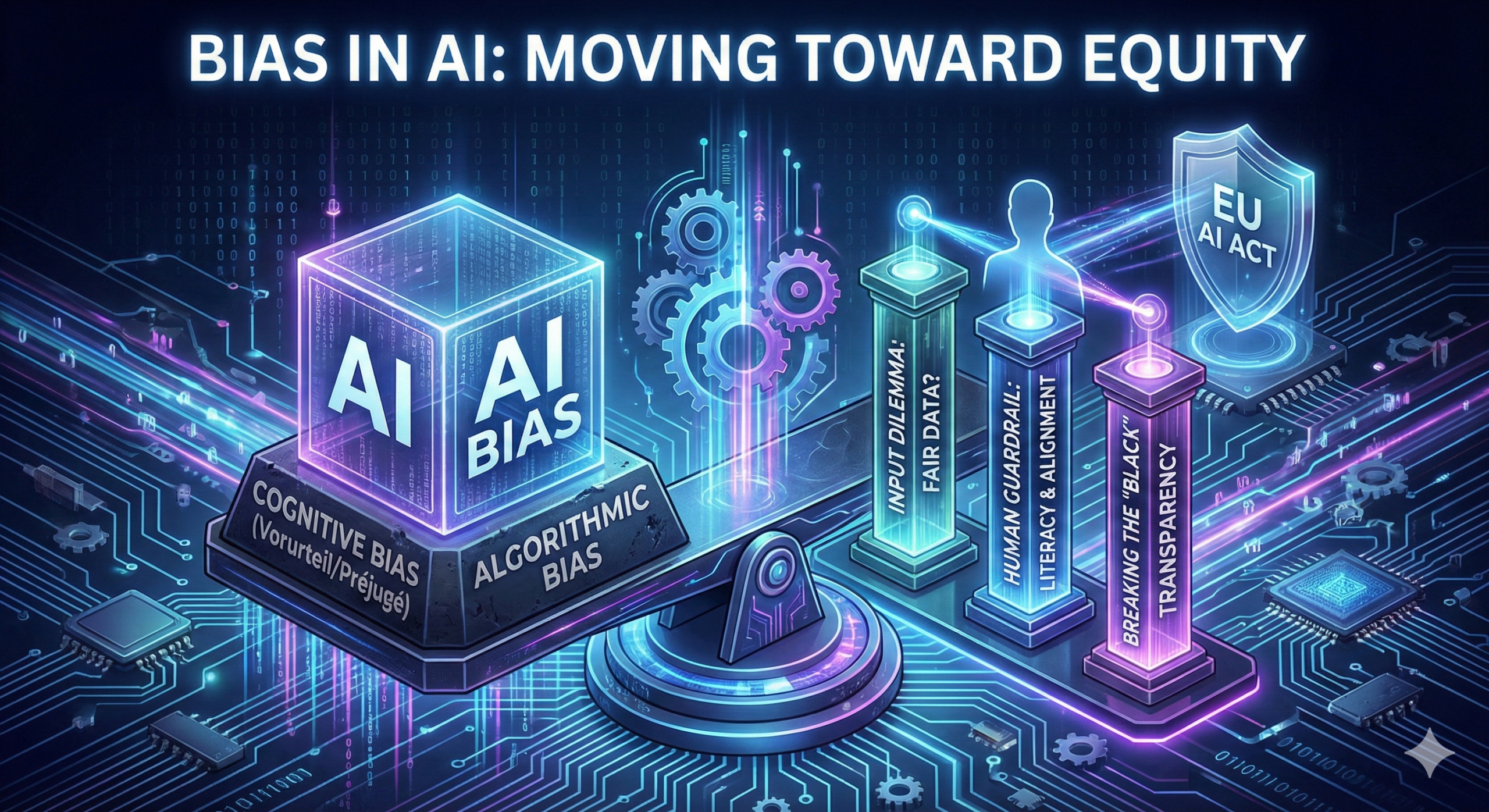
    Bias (German: Vorurteil | French: Biais), is a disproportionate weight in favour of or against one thing, person, or group compared with another, usually in a way considered to be unfair (Oxford University Press, 2026). In the world of AI, we need to consider specifically Cognitive Bias (The inherent human prejudices) and Algorithmic Bias, where AI…

  • The uncomfortable middle

    or the erosion of human agency Frontier AI models behave intelligently. Several dimensions of human intelligence are increasingly replicated by multimodal AI architectures, including interpersonal and intrapersonal capabilities, the classic human realms of emotional intelligence where we understand others and ourselves. While AI machines still fail strict empathy tests, the social reality is that they don’t…

  • Generative AI in European Policing

    The landscape of law enforcement is undergoing a major shift. While still slow and in its beginnings, Generative Artificial Intelligence (GenAi) is no longer a buzzword and is rapidly qualifying as a new General-Purpose Technology (OECD, 2025). Its current trajectory, marked massive performance gains, industry-wide adoption and a developing high-performance computing ecosystem, suggests it will soon…