Industry 4.0 and AI
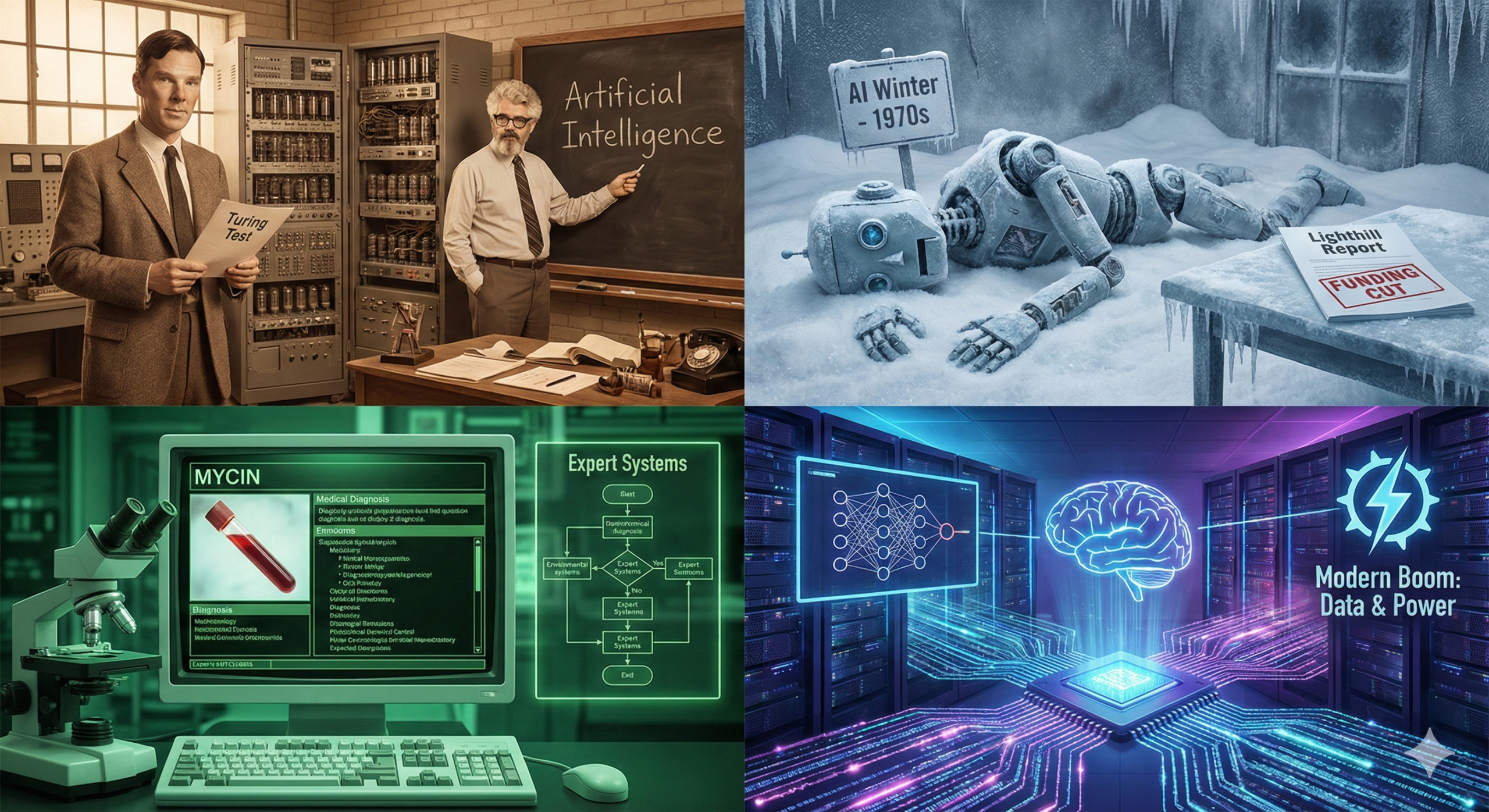
Historically, the development of a General Purpose Technology does not follow a straight line. Instead, societies usually move through cycles of high excitement followed by periods of losing interest. Even though we are currently in the middle of the Fourth Industrial Revolution, we can still use old frameworks to understand what is happening. One important concept is Amara’s Law, which states that people tend to overestimate the effect of a technology in the short run but underestimate it in the long run (Gartner 2023). Another useful tool is the Hype Cycle, which shows how a technology moves from a peak of inflated expectations to a final plateau of productivity (Dedehayir and Steinert 2016).
Defining Industry 4.0
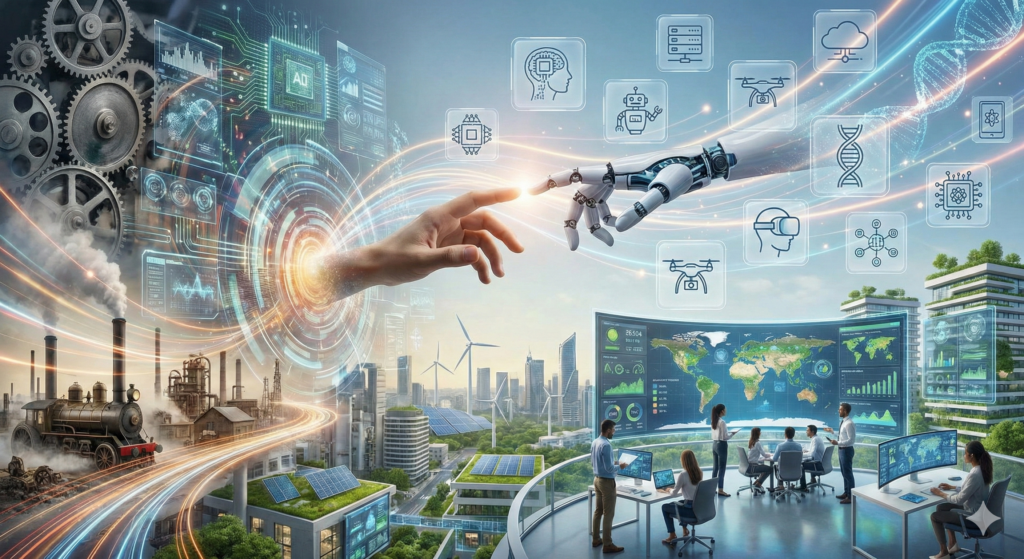
Many people do not view the current technological changes as a brand new revolution. Instead, they see it as an evolution of previous digital tools, which is why it is called Industry 4.0. This era is defined by very fast improvements in technology and the merging of the physical and digital worlds. This creates a highly connected environment where people can theoretically make better decisions because they have more information.
Like the first three industrial revolutions, Industry 4.0 changes how businesses and communities work. However, there is one major difference: these new technologies are advancing much faster than before. Because of this speed, researchers at Deloitte (2018) warn that Industry 4.0 brings both greater opportunities and greater risks than any revolution that came before it. This shift involves many different tools, including artificial intelligence, blockchain, robotics, and biotechnology (Schwab 2017).
Necessary Shifts for the Future
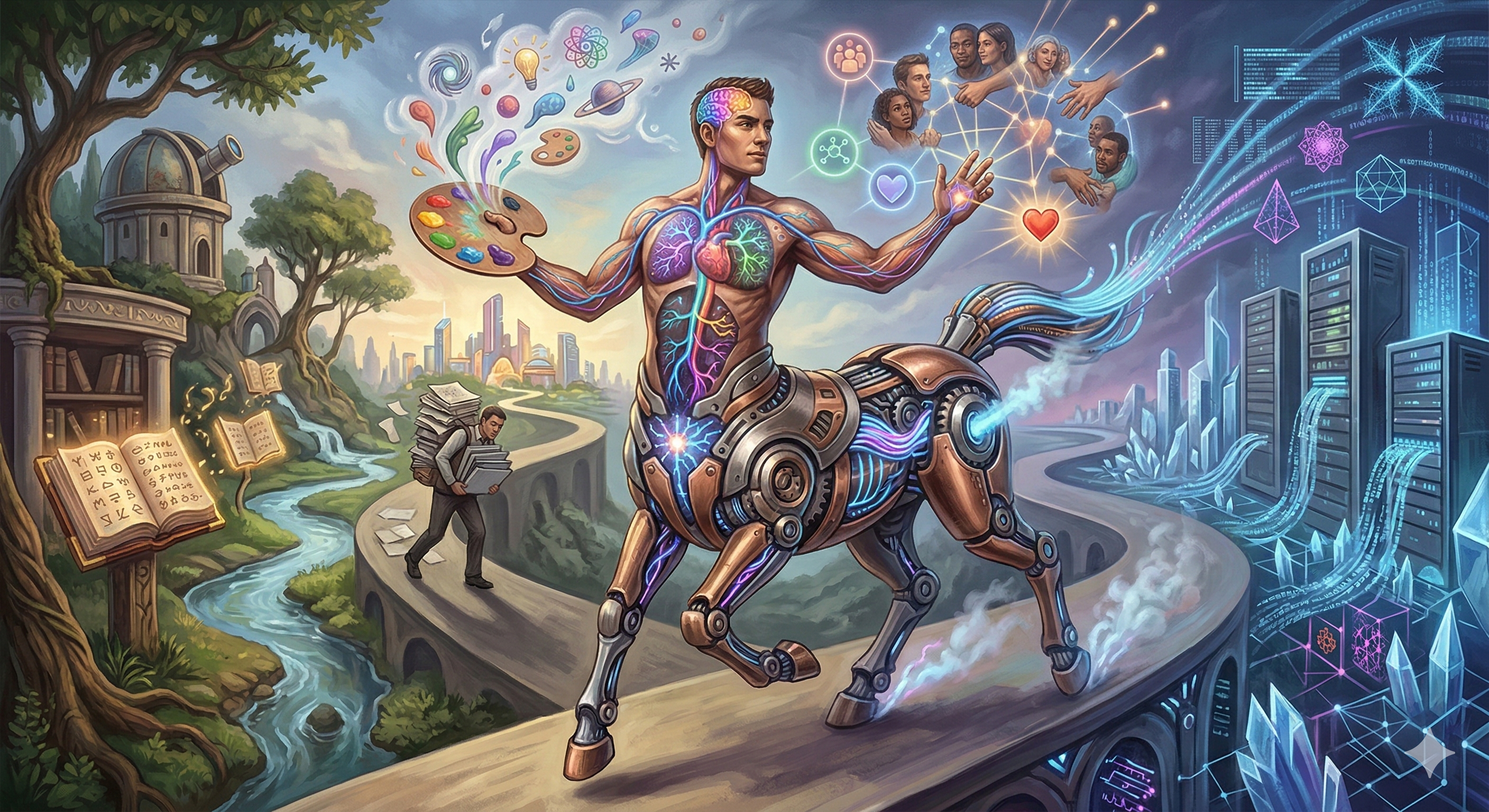
The Fourth Industrial Revolution is a major shift that forces us to rethink how we value development and humanity. In the past, industrial leaders used a command and control mindset to manage workers. Today, that approach is a weakness. The most important skill now is the ability to unlearn old habits and adapt to new situations.
For society to thrive, we must move past the initial hype and focus on ethical leadership. Technology should be used as a tool to solve global problems like climate change and inequality. For individuals, success now requires a growth mindset. As artificial intelligence begins to handle logical tasks, soft skills like empathy and ethics become the most important skills for workers to have (World Economic Forum 2020). Businesses must also change by working together in ecosystems rather than staying in separate departments. Companies need to think big but start with small steps and move quickly. In this new world, trust is more important than just collecting data.
Conclusion
The biggest challenge of our time is the need for responsible leadership. Leaders must ensure that technological progress does not cause social harm. By focusing on ethics, adaptability, and cooperation, society can manage the risks of Industry 4.0 and make the most of its many opportunities.
Reference List
Dedehayir, O. and Steinert, M. (2016). The hype cycle revisited: A historical analysis of Gartner’s model. Technology in Society, 44, pp.28-41.
Deloitte (2018). The Fourth Industrial Revolution: At the intersection of readiness and responsibility. [online] Deloitte Insights. Available at: https://www2.deloitte.com [Accessed 24 Feb. 2026].
Gartner (2023). Understanding Gartner’s Hype Cycles. [online] Gartner. Available at: https://www.gartner.com [Accessed 24 Feb. 2026].
Schwab, K. (2017). The Fourth Industrial Revolution. London: Portfolio Penguin.
World Economic Forum (2020). The Future of Jobs Report 2020. Geneva: World Economic Forum.